Yujun Chen
1. Congratulations on winning in the New York Photography Awards! Can you share a little about yourself, what inspired you to pursue photography, and how has your journey evolved since your first shot?
First of all, I would like to thank the New York Photography Awards and the judges for their affirmation of my work.
I am a landscape photographer from Yunnan, China. I live in China and New York. I have always loved nature and started exploring the wilderness since I was a child. In the 1990s, when I was engaged in photography, I naturally chose landscape photography.
Since the beginning of my photography career, I have always used film and have established my own black-and-white darkroom studio. I feel that when I shoot with film, from the moment I press the shutter to the development of the film, the mystery and some uncertainties in the process are very challenging, and the chemical changes and texture of the film in the process of exposure and development are amazing. I am obsessed with this process.
2. Can you share the story or inspiration behind your award-winning piece? How does winning this award make you feel about your journey in photography?
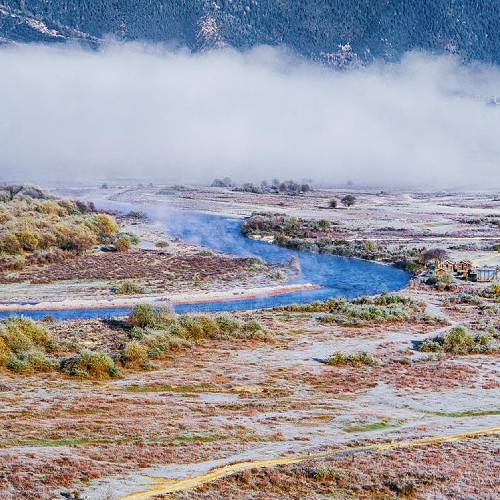
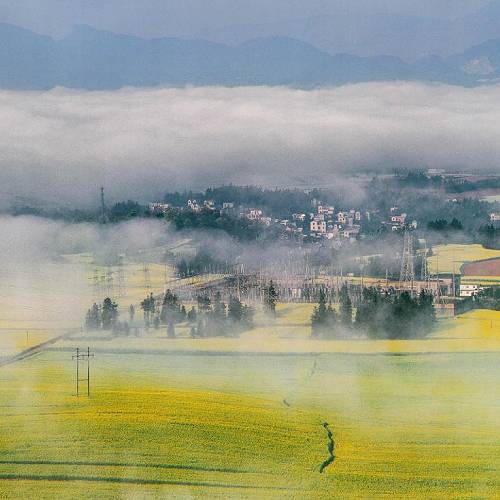
This year, I submitted two landscape works from Tibet and two from Yunnan. The shooting locations of these works are places that I have visited many times over the years. Every time I go to the countryside, into nature, I like to talk to local people to learn about the climate, geography and humanistic conditions there.
Sometimes I also live in farmers' homes. They are warm, friendly, simple and sometimes a little cunning. I have befriended a lot of them over the years. I like to drink and chat with them to understand the stories of their work and life. In short, the magnificent scenery of nature, unpredictable wind and light, and wine and farmers are the driving force and inspiration for my creation.
3. How do you decide which photo to submit for a competition?
Works shot in the past five years.
4. What’s your go-to camera setup, and why does it work best for your projects? What’s your favorite feature?
I use a Rollei medium-frame film camera, Carl Zeiss planar 80mm F2.8 lens, Schneider-Kreuznach 90mm F4 APO lens, Schneider-Kreuznach 140-280mm F5.6 lens. FUJICHROME Professional COLOR REVERSAL100 120FILM; ILFORD DELTA100 120/135 black and white FILM; Kodak T-MAX100 120/135 black and white FILM.
5. If someone looked at your work, what’s the one thing you’d want them to feel?
I hope people can feel the amazing and shocking natural scenery and the high-definition and real sense of the scene from my works. At the same time, I hope to inspire people's respect and love for nature.
6. Who or what has been your biggest influence in photography?
Mr. Ansel Easton Adams and my teacher, Mr. Qirui Ren.
7. What message would you share to inspire photographers to participate in photography awards, and what advice would you give to help them excel in the competition?
I don’t have many suggestions to offer, but I can talk about my own experience: photographic works should be shared with the public, so participating in more high-level professional activities, such as the New York Photography Awards, is a good opportunity for photographers to disseminate and share their works. The selection mechanism of the New York Photography Awards also has a good incentive effect on photographers.
8. What’s one piece of advice for someone just starting in photography?
This is more of my own experience than advice: choose a subject category that you like and love, and then work hard and persist. It would be better if you could drink some wine, which is conducive to the flash of inspiration.
9. What role do editing and post-processing play in your creative workflow?
The role of editing and post-production processing is very important. The shooting has only completed nearly half of the whole process, and post-production processing is the more important other half. For black-and-white film, I develop, enlarge and produce in my own dark room.
For the color reversal film, I send it to a professional photo studio for development, where they use the Heidelberg electronic color scanner (made in Germany) to carry out drum scans, and then classify and archive.