Raghuvamsh Chavali
1. Congratulations on winning in the New York Photography Awards! Can you share a little about yourself, what inspired you to pursue photography, and how has your journey evolved since your first shot?
I am Raghuvamsh Chavali, a photographer based in Canada. My journey into photography began with curiosity rather than intention. I was drawn to observing small moments in everyday life patterns, light moving through the patterns, movement and behavior of subjects, and photography became a way to slow those moments down and understand them.
Over time, my practice has evolved from single images to longterm projects. Today, I focus on creating cohesive bodies of work that explore the relationship between nature, people, wildlife and urban environments. The evolution has been less about better equipment and more about patience, consistency, and learning to trust a personal visual language.
2. Can you share the story or inspiration behind your award-winning piece? How does winning this award make you feel about your journey in photography?
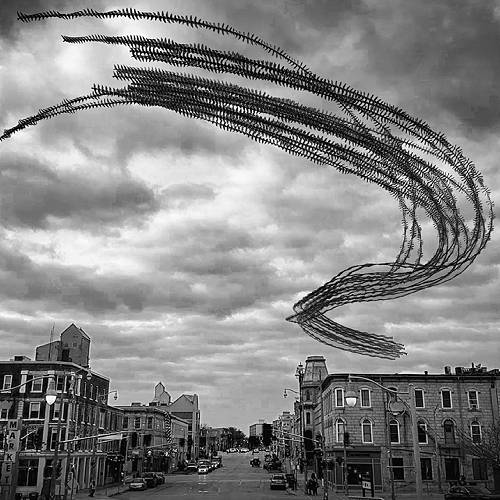
The award-winning images are drawn from my long-term projects Wings Over Concrete and Whispers in the Mist. Wings Over Concrete explores how birds navigate and adapt within human-built environments, focusing on the visual dialogue between organic flight patterns and rigid urban structures, where moments of unexpected harmony emerge.
Whispers in the Mist is a more playful and experimental project, centered on observing human presence through shadows and silhouettes softened by mist, allowing form and movement to take precedence over identity.
Winning this award feels like a meaningful acknowledgment of sustained effort rather than a single moment of success. It reinforces the value of staying committed to projects over time and allowing ideas to mature naturally.
3. How do you decide which photo to submit for a competition?
I look for images that represent a larger idea rather than just visual impact. The photograph should stand on its own, but it should also reflect consistency, intent, and authorship.
4. What first made you pick up a camera?
Curiosity & intuition. I wanted to understand how moments could be preserved and interpreted differently once framed. Photography gave me a way to observe the world more attentively and notice details that often go unseen.
5. What’s your favorite type of photography, and why do you love it?
I am drawn to conceptual story telling, art driven photography grounded in real environments. I am especially interested in projects that exist at the intersection of nature and human spaces, where stories emerge subtly rather than through overt drama. Juxtaposition plays an important role, as I love contrasting elements which often reveal deeper visual and emotional connections.
I am most engaged by work that can evolve into long-term, experimental projects and images that gradually reveal patterns over time and invite reflection instead of offering immediate conclusions.
6. What’s your go-to camera setup, and why does it work best for your projects? What’s your favorite feature?
I work with a combination of professional cameras and smartphones, depending on the needs of the project. Smartphones offer immediacy and freedom of movement, which is especially important when working with unpredictable subjects like birds in urban environments.
When possible, I enjoy using my Sony 200–600mm telephoto lens, as it allows me to observe behavior from a distance without interference.
Ultimately, flexibility is the most important factor for me, the ability to respond quickly and intuitively without disturbing the scene. The tool itself matters less than how seamlessly it supports the way I work.
7. If someone looked at your work, what’s the one thing you’d want them to feel?
A sense of pause. I want viewers to slow down and notice the quiet relationships between movement, space, and life that exist around them every day.
8. What was the most challenging part of capturing your winning shot?
Patience. The image required waiting for multiple elements movement, alignment, and light to come together naturally. Nothing about it could be rushed or staged.
9. Is there a specific place or subject that inspires you the most?
It’s hard to pick just one place. I love spending time in forests and around lakes, slowing down and simply being present with nature and the incredible life it holds. In Canada, Algonquin Park is a place I keep returning to, much like Tadoba was for me when I lived in India.
At the same time, I am equally inspired by urban environments and travel. The shades of blue along the beaches of the Maldives and Thailand seen from above, city views in places like Singapore, New York, and Italy, and the energy of street life in India from the lanes around Charminar in Hyderabad to Mumbai’s Dadar Flower Market, Chhatrapati Shivaji Terminus, Colaba, and Bhuleshwar Market all feed into how I see and photograph the world. Each place offers a different rhythm, and that contrast is what keeps inspiring me.
10. What message would you share to inspire photographers to participate in photography awards, and what advice would you give to help them excel in the competition?
My advice is to submit work that truly represents your voice, not what you think a jury wants to see. Concentrate on Novelty, Consistency and authenticity.
11. What’s one piece of advice for someone just starting in photography?
Observe, practice, learn, appreciate, then repeat the process.
12. What role do editing and post-processing play in your creative workflow?
Editing is an extension of intent, not correction. I use post-processing to refine clarity and emphasize on story telling, while keeping the image honest to the moment it was captured.
13. How do you see technology, like AI, influencing the future of photography and your own approach?
I see technology, including AI, as a powerful support system rather than the source of ideas. Tools will continue to evolve, but they should serve the artist, not define the art. Any technology now or in the future must first recognize and respect the creative vision and the person behind it.
14. If you could photograph anything or anyone in the world, what would it be?
I am less interested in iconic subjects and more drawn to familiar places that reveal something unexpected.