Pieter Clicteur
1. Congratulations on winning in the New York Photography Awards! Can you share a little about yourself, what inspired you to pursue photography, and how has your journey evolved since your first shot?
I’m Pieter Clicteur, a Belgian photographer and visual artist whose work focuses on the fragile boundary between inner worlds and outward appearance. My journey into photography grew from a desire to understand human nature beyond the surface, emotionally, psychologically, and symbolically.
Over time, my work evolved from documenting reality to constructing images that explore identity, instinct, and vulnerability through a more conceptual and narrative-driven approach.
2. Can you share the story or inspiration behind your award-winning piece? How does winning this award make you feel about your journey in photography?
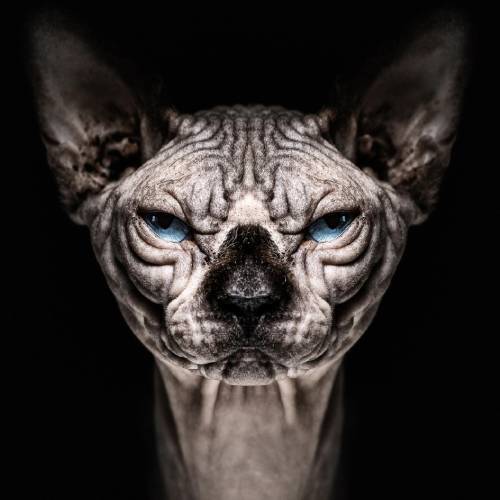
Animalia Humanitas is a series that explores the thin line between our civilized self and our primal nature. By merging human portraiture with animalistic symbolism, the work reflects instincts we often suppress: fear, power, fragility, and desire.
Winning this award feels deeply meaningful because the series is very introspective and symbolic. It confirms that work rooted in metaphor and inner exploration can resonate strongly across cultures.
3. How do you decide which photo to submit for a competition?
I look for work that represents a coherent vision rather than a single striking image. For competitions, I choose photographs or series where concept, execution, and emotion align, images that feel necessary rather than decorative.
4. What first made you pick up a camera?
I initially picked up a camera as a way to observe and understand people and myself. Photography quickly became a language, one that allowed me to express things that are difficult to articulate in words.
5. What’s your favorite type of photography, and why do you love it?
Conceptual portraiture is my main focus. I’m fascinated by how a portrait can function as a psychological landscape, revealing inner states, archetypes, and symbolic layers rather than just physical likeness.
6. What’s your go-to camera setup, and why does it work best for your projects? What’s your favorite feature?
My setup adapts to each project, but I value equipment that gives me full control over light, detail, and tonal depth. For series like Animalia Humanitas, precision is essential, especially to capture subtle expressions and textures that support the symbolic narrative. Dynamic range is one of the features I rely on most.
7. If someone looked at your work, what’s the one thing you’d want them to feel?
I want viewers to feel a sense of recognition, even slight discomfort, as if the image is mirroring something they know but rarely confront. Ideally, the work invites introspection rather than providing clear answers.
8. What was the most challenging part of capturing your winning shot?
The most challenging part was working with animals in a way that felt respectful and authentic. Unlike human subjects, animals can’t be directed; everything depends on observation, timing, and patience. I had to wait for moments where posture, gaze, and energy aligned naturally with the human presence. Patience became essential, allowing instinctive, unscripted interactions to unfold rather than forcing an image.
9. Is there a specific place or subject that inspires you the most?
Human subjects inspire me the most, especially when working in environments that allow space for vulnerability and transformation. Inspiration often comes from psychology, mythology, and the natural instincts we share with the animal world.
10. Who or what has been your biggest influence in photography?
My biggest influences come from a mix of personal experiences, psychology, and visual art. I’m particularly influenced by ideas around archetypes, the subconscious, and the tension between control and instinct.
To name one: Anton Corbijn.
11. What message would you share to inspire photographers to participate in photography awards, and what advice would you give to help them excel in the competition?
Photography awards are not just about recognition, they’re about reflection. Submitting work forces you to articulate your vision and stand behind it. My advice is to submit work that is honest and conceptually strong, even if it feels vulnerable. Authenticity is often what stands out most.
12. What’s one piece of advice for someone just starting in photography?
Don’t rush style or success. Focus on understanding why you make images, not just how. Learn to observe people, light, emotion and allow your work to evolve naturally over time.
13. What role do editing and post-processing play in your creative workflow?
Post-processing is an integral part of my storytelling. It allows me to refine atmosphere, emphasize emotion, and support the conceptual layers of the image, always in service of the narrative, never as an end in itself.
14. How do you see technology, like AI, influencing the future of photography and your own approach?
Technology, including AI, can be a powerful tool when used consciously. I see it as something that can support conceptual development and workflow, but the emotional and symbolic core of photography will always come from human intent and experience.
15. If you could photograph anything or anyone in the world, what would it be?
I'm currently working on a new, big project that talks about suicide prevention, called HEAVY. I would like to continue photographing people within the heavy music scene, a subculture rooted in rock and metal genres, where intensity, emotion, and individuality are openly expressed. What draws me to this world is not only the music but the honesty of the people within it.
Beneath the aggressive exterior lies a strong sense of vulnerability, community, and emotional release. Photographing this space allows me to explore identity and catharsis in a very direct and human way. I'm trying to make portraits of the biggest names in rock and metal history. Hard work to get in touch with these people, so all help is welcome here.